Greenpoint
Loft Space.
Tell us once what you're after — including the floors that never hit the listing sites. A person reads it. That's the whole thing.
Seven questions.
That's the whole thing.
Under two minutes. No account, no login. A person reads every one.
How much room do you need?
Before you tour, hear what to look for.
Structure, submarkets, and the questions worth asking on a walkthrough — including the ones that decide whether a floor works for what you make.
The Physical DNA of Greenpoint Office Lofts
Three generations of building stock, what to check on a tour, and how the micro-markets differ. 6 minutes.
AI-narrated
Read the transcript
Host 1Usually when you hear the words commercial office loft, your brain instantly goes straight to the real estate hype, right? Like exposed brick and perfectly placed monsteras everywhere.
Host 2Oh yeah, the whole glossy pitch.
Host 1Exactly. But today we're doing a deep dive into the dry, physical reality of Greenpoint, Brooklyn. No hype, just looking at the actual bricks, timber, and steel to uncover what, you know, actually matters on a tour. Because you really have to look past the aesthetics to understand what you can physically do inside a space today. You have to know what it was originally built to do. It all goes back to, well, Neziah Bliss laying out the alphabet streets in the 1830s.
Host 2Right, Ash, Box, Clay, DuPont, Eagle, Freeman.
Host 1Yeah, which is honestly still the fastest way to know where you are. But that grid hosted three distinct building generations. If you look at the waterfront, like West and Calyer, Sneden moved a shipyard there in 1851. And Continental Ironworks built John Ericsson's USS Monitor right there in 1862.
Host 2Wow, okay, so that 1860 to 1890 shipyard era, that's your first generation. Load-bearing brick and heavy timber.
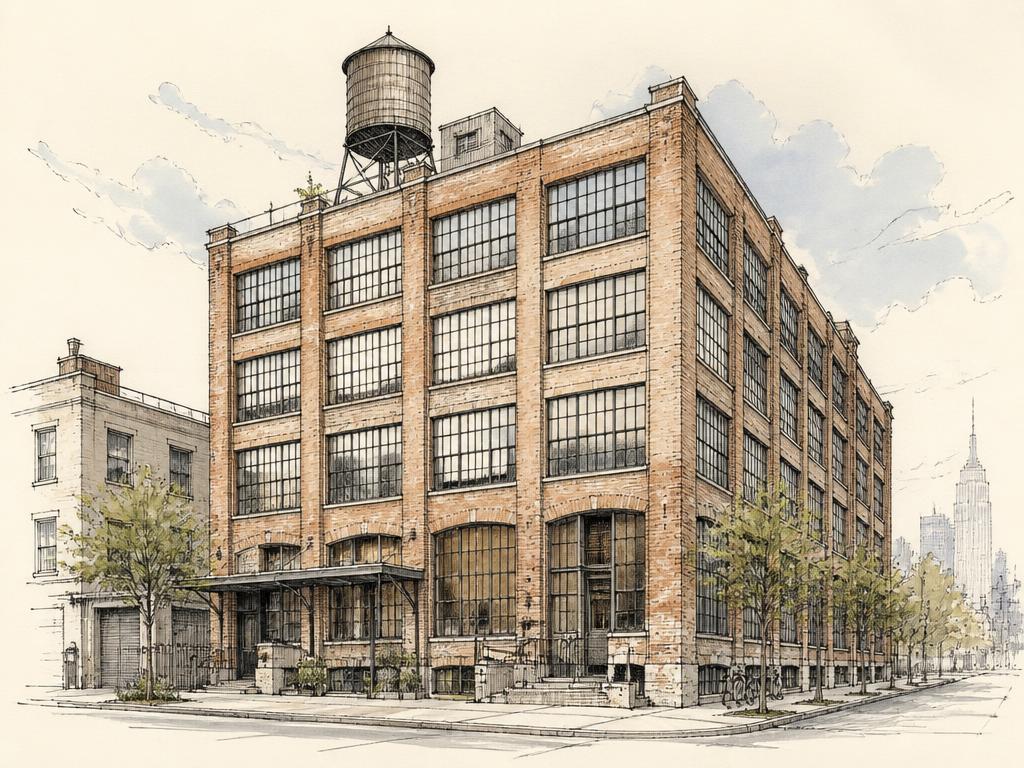
Host 1Exactly. Heavy timber posts, plank floors, and tight plates of maybe 4,000 to 8,000 square feet. Light from two exposures at best through these small segmental arch windows.
Host 2Which is actually why a modern five-person studio can rent a full floor here, unlike those massive plates over in Williamsburg.
Host 1Yeah, precisely. But then by 1890, the five black arts take over printing, pottery, glassmaking, oil refining, and ironworking. Pratt's Astral Oil Works was on the creek. And after a fire in 1872, Eberhard Faber rebuilds at Kent and West, which really kicks off the German Renaissance revival era.
Host 2So that second generation, like the Eberhard Faber complex, that was built specifically for people sitting at workbenches, right?
Host 1Right, so you see decorative brickwork, much bigger windows for light, and taller floors. But then the third generation, from 1925 to 1960, switches things up entirely.
Host 2That's the creekside industrial stuff, right? Concrete and steel.
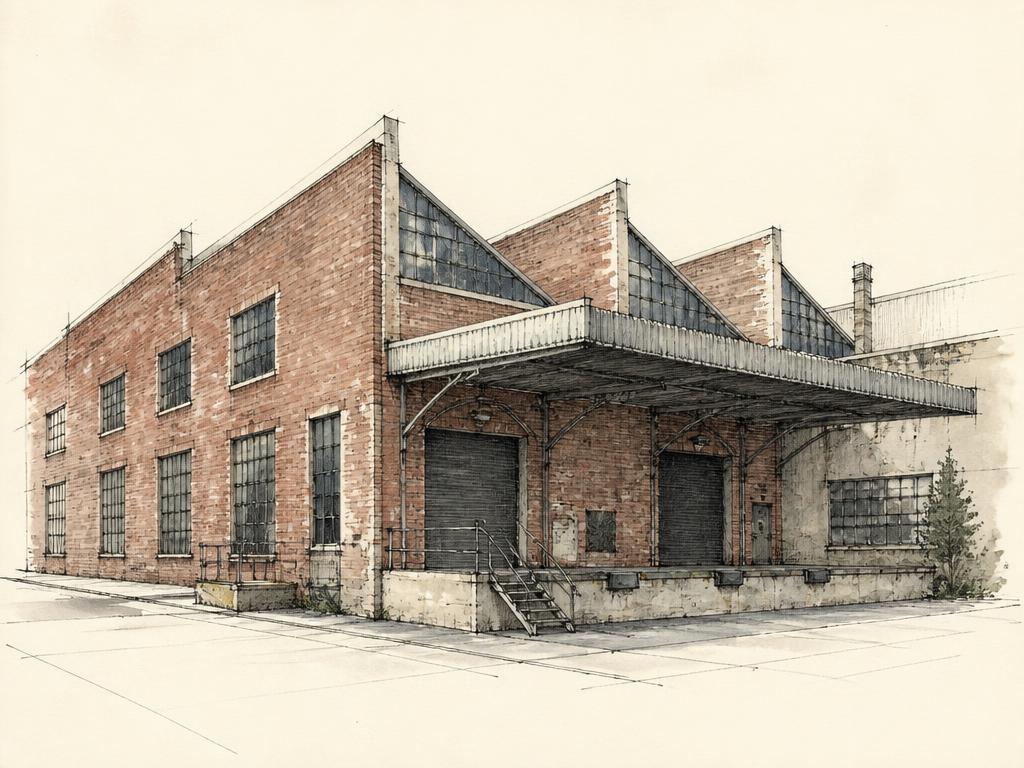
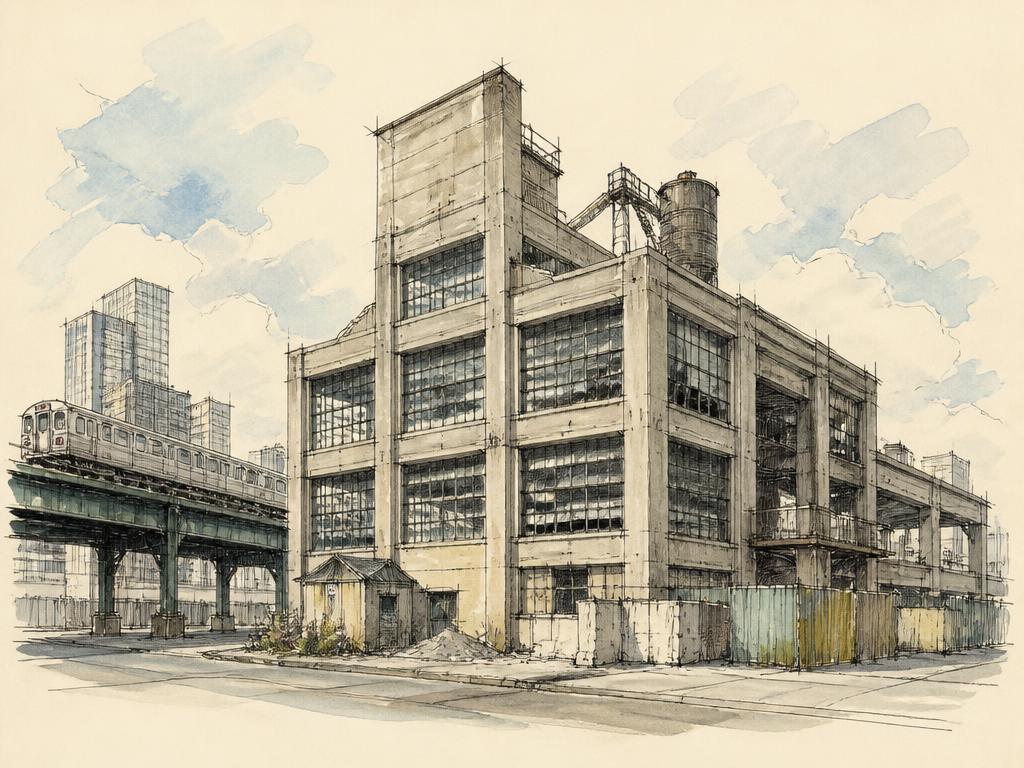
Host 1Yeah, toward Newtown Creek and the Meserole Corridor, wider bays, loading docks at grade, and heavy floor loads. It's built for machinery and pallets.
Host 2So that's the real fork in the road, built for benches versus built for machinery. It's like choosing between a tailor shop and a loading dock.
Host 1That original DNA fundamentally restricts what a tenant can do. It completely dictates your micro market.
Host 2So you've got three distinct zones. The waterfront and West Street gives you the old shipyard shoreline, best light, and you're closest to the India Street Ferry. But if you want to be near the G train, you're looking at the pencil factory core, right? Like Kent, Greenpoint Ave, Franklin.
Host 1Yeah, but those are landmark blocks. It's mostly office and studio tenants, and availability is so tight it rarely reaches a listing site. If you need production space, you want the Creek and Meserole Corridor.
Host 2Because it's inside the industrial business zone.
Host 1Exactly. Larger plates, loading docks, and the best value per foot if you don't need a storefront.
Host 2Okay, so let's say I find a spot in one of those older shipyard buildings and I'm walking the floor. I know those timber columns land every 10 to 14 feet.
Host 1Which is exactly why you have to bring a tape measure. If you just trust an emailed floor plan, you might end up with a 19th century post right in the middle of your glass conference room.
Host 2Oh man, yeah. And what about the ceilings?
Host 1You have to ask for clear-to-deck ceilings, not bottom-of-duct. You want the actual measurement to the roof deck, which is usually 11 to 14 feet in the brick stock. Bottom-of-duct just tells you where the lowest AC vent hangs, meaning you're losing feet of vertical space to hidden ductwork.
Host 2Right. And speaking of that old-world charm, doesn't exposed timber usually mean you're inheriting original steam heat and undersized electrical?
Host 1Oh, almost always. You have to aggressively confirm the amperage and ask point-blank if upgrading the HVAC is base building provided or coming out of your own build-out budget.
Host 2I assume floor load matters too, right?
Host 1Definitely. Ask for it in pounds per square foot. Creekside is commonly 125 and up, but older brick is often much lower than people assume because the framing is just timber.
Host 2And freight elevators.
Host 1Check the capacity in pounds and verify if the car opens directly into your space. So many of these older buildings run just one small car for every floor.
Host 2Also, if you're in a landmark district, ask which one. Exterior work goes through review even though interiors don't, which changes your timeline.
Host 1So even if the physical space is perfect, the logistics could kill the deal.
Host 2Like the G train is the only line that doesn't enter Manhattan.
Host 1Yeah, the G train is the real objection. A Midtown-heavy team is going to feel that daily. You must test the commute with your actual team.
Host 2I mean, the India Street Ferry offsets a lot, right? It's fast to Midtown East and Wall Street.
Host 1It is, and Brooklyn or Queens teams usually find Greenpoint easier than Williamsburg, but test it first. Also, budget for those condition issues we mentioned, the steam heat, the electrical.
Host 2What about the 2010 Newtown Creek Superfund status? Does that scare people off?
Host 1Well, it covers waterway sediment, not the buildings, so it's essentially a non-issue for a second-floor office tenant. It really only matters for ground floor soil disturbance, new construction, and acquisition financing.
Host 2Right, because this market is so unique, accessing it takes a totally different approach. There are fewer institutional owners here than in Williamsburg, right?
Host 1Yeah, it's dominated by long-hold family ownership, so a huge share of the best spaces never get listed publicly. It just moves from landlord to broker to a very short list.
Host 2Which is exactly why you can fill out the short seven-question form right on this site. No account needed, and a real person reads it to match you with unlisted floors.
Host 1It really is the most efficient way in. Absolutely.
Host 2Yeah.
Host 1So as you look for that perfect commercial office loft, consider this. How might the physical constraints of a 19th-century building inadvertently end up shaping your modern company's daily culture?
Newtown Creek to Bushwick Inlet, river to the Queens line — the alphabet streets and the old shipyard blocks, still the most intact industrial fabric in north Brooklyn.
One train, one ferry, and an honest answer.
Transit is the real conversation in Greenpoint. Test it with your actual team before you fall in love with a floor — it's the objection we hear most on tours here.
- Greenpoint Av
- Nassau Av
The only line in the system that never enters Manhattan. Superb for Queens and south Brooklyn, and the honest objection for everyone else.
- India St / Greenpoint
The fastest way into Midtown East and Wall Street from here, and the reason the waterfront blocks lease the way they do.
- Bedford Av
Not in Greenpoint, but fifteen minutes from the south end — worth knowing if your team is Manhattan-heavy.
- Manhattan Av
- Franklin St
- Greenpoint Av
- Nassau Av
The B62 down Manhattan Avenue is the practical link to Williamsburg and downtown Brooklyn.
Worth timing properly: the India Street ferry is close to the waterfront buildings and a real walk from the Pencil Factory blocks. Which one your building sits near changes the commute more than the line does.
A working waterfront that never stopped working.
1802 → today
A grid on a peninsula
Neziah Bliss buys up the farmland at Brooklyn's northern tip and lays out a street plan. He names the east–west streets alphabetically — Ash, Box, Clay, Dupont, Eagle, Freeman, Green, Huron, India, Java, Kent, Milton, Noble, Oak — which is still the fastest way to know exactly where you are.
The shipyards arrive
Samuel Sneden moves his shipyard from Manhattan to the foot of West and Calyer Streets, one of the first to make the jump. Within a decade the whole western shoreline is yards, ropewalks and boiler shops.
The Monitor
Thomas F. Rowland's Continental Iron Works builds the USS Monitor at West and Calyer — the Union's first ironclad, launched in January and fighting the CSS Virginia at Hampton Roads two months later. John Ericsson, who designed her, is the figure in the statue at McGolrick Park.
The five black arts
Printing, pottery, glassmaking, oil refining and ironworking — the trades that gave Greenpoint its industrial base and, with no irony intended, the nickname "the Garden Spot of the Universe." Charles Pratt's Astral Oil Works on Newtown Creek later folds into Standard Oil; Peter Cooper's glue factory runs nearby. The brick mill buildings from these decades are the loft stock you tour today.
The pencil factory
After fire destroys his Manhattan plant, John Eberhard Faber rebuilds at Kent and West Streets. The complex grows across two blocks in German Renaissance Revival brick, star-in-diamond motifs and all, and becomes the largest pencil works in the country.
Faber leaves, Poland arrives
Eberhard Faber moves production to Pennsylvania and the buildings empty out. Through the same decades Polish families settle along Manhattan Avenue in numbers that make Greenpoint the city's Polish center — the churches, bakeries and butchers that are still there.
Rezoning, then Superfund
The Greenpoint–Williamsburg rezoning opens the waterfront to residential and towers follow. Five years later the EPA designates Newtown Creek a federal Superfund site — a century of refining finally on the books. The industrial blocks inland stay industrial.
Crowdfunding in a pencil factory
Kickstarter buys 58 Kent Street in 2011 and turns the old Faber building into its headquarters. Broadway Stages runs soundstages across the neighborhood, design studios and record labels take the brick floors, and the creek-side blocks still make things. Working neighborhood, different work.
Who you'd be sharing the block with.
- Kickstarter (58 Kent St, the old pencil factory)
- Design and branding studios on Franklin and West
- Record labels and recording studios off Greenpoint Ave
- Photo studios in the Kent Street brick buildings
- Broadway Stages soundstages
- Production offices along the creek
- Grip, lighting and set shops off Meserole
- Post houses on Manhattan Ave
- Peter Pan Donut & Pastry (Manhattan Ave)
- Paulie Gee's (Greenpoint Ave)
- Karczma (Greenpoint Ave)
- Greenpoint Fish & Lobster (Nassau Ave)
- Achilles Heel (West St)
- WNYC Transmitter Park
- McCarren Park
- McGolrick Park
- Word bookstore (Franklin St)
- Woodshops and metal fabricators near the creek
- Ceramics and glass studios off Norman
- Small-batch food producers in the IBZ
- Furniture makers on Greenpoint Ave
- Polish bakeries and butchers on Manhattan Ave
- Independent design showrooms on Franklin
- Vintage and secondhand on Nassau
- Homewares showrooms near India St
Why bother
The best floors are gone before they're listed. Character space moves through people, not portals — so we do it the other way around. You tell us what you'd love. We keep an eye out.
You told us what you need. That's where it ends.
No newsletter, no CRM queue, no "just checking in." A person reads your brief and reaches out directly when a floor's worth showing you.
- 01
We never sell, share or rent your brief — not to landlords, not to other brokers, not to a data company.
- 02
No newsletters or mass blasts. When we get in touch, it's a direct email or text about a specific space.
- 03
A person reads it. Not a bot, not a queue in some CRM.
- 04
Tell us to stop and we stop. Simple as that.
The Definitive Guide to Greenpoint Industrial Lofts
Shipyard-era brick, the landmarked pencil factory, and the creek-side blocks where whole floors still exist.
Greenpoint not quite it?
We work the surrounding neighborhoods too. Mention it in the brief.
What people ask before they take a Greenpoint loft.
01What counts as a 'creative office loft' in Greenpoint?
02How much does loft office space in Greenpoint cost?
03What's the smallest space I can rent in Greenpoint?
04How do I actually get to Greenpoint?
05Can I do fabrication, food production or light manufacturing here?
06What's the story with the Pencil Factory buildings?
07Does the Newtown Creek Superfund designation affect tenants?
08How is Greenpoint different from Williamsburg for offices?
09What buildings are the classic Greenpoint office lofts?
10Do you actually have off-market listings?
Got one we didn't cover? Put it in the brief above, or call 646-291-2018.
The words that decide what you're signing.
Every term that turns up on a tour, in a floor plan or in a lease — what it means, why it costs you, and how it behaves in this neighborhood specifically.
- Heavy timber frame
Construction using large solid wood posts and beams, typically pre-1900. Visible as massive wooden columns and thick joists overhead, usually with load-bearing brick walls.
Why it mattersIt sets column spacing, floor load, and how you can attach anything to the structure.
In GreenpointThis is most of the shipyard-era stock along the western shore. Columns land close together and plates are tight — commonly fifteen hundred to four thousand square feet — with light from two exposures at best. Plan around the columns rather than hoping the drawing is right.
- Floor load
The weight a floor is rated to carry, in pounds per square foot. Live load is what you can put on it; dead load is the structure itself.
Why it mattersIt decides whether a plan works or gets stopped. Presses, kilns, dense filing and heavy inventory all need a number in writing.
In GreenpointThe split here is sharp. The creek-side and Meserole corridor buildings commonly carry a hundred and twenty-five pounds per square foot and up. The older brick-and-timber stock toward the waterfront is frequently well below that, because the framing is wood. Same neighborhood, very different answers.
- Clear-to-deck
The distance from the finished floor to the underside of the structure above — the true ceiling height, before ductwork, sprinklers or lighting.
Why it mattersBrokers quote the highest number in the room. Retrofitted duct runs can take two or three feet off the usable height.
In GreenpointThe brick stock here runs roughly eleven to fourteen feet. Anything advertised well above that is usually a top floor or a former engine room — worth asking which, because the rest of the building won't match it.
- Column spacing
The clear distance between structural columns, sometimes called the bay.
Why it mattersIt decides whether a desk grid, a machine or a photo backdrop actually fits.
In GreenpointIn the shipyard-era buildings columns land every ten to fourteen feet. Walk the floor with a tape before planning an open studio around an emailed floor plan — the drawings in this stock are often decades old.
- Freight elevator
A goods lift, usually with manual gates, rated in pounds. In many older buildings it is run by a building employee rather than by tenants.
Why it mattersCapacity decides what you can move in. The operator's hours decide when.
In GreenpointMany Greenpoint buildings run a single small freight serving every floor. That is fine for an office and a genuine constraint for a maker. Ask the capacity in pounds, whether the car opens into your space or a shared corridor, and who operates it.
- Landmarks review
The approval process required for exterior work on a building inside a designated historic district — windows, storefronts, signage, rooftop equipment and facade penetrations.
Why it mattersInterior work is unaffected. Anything visible from the street is a permitting timeline, not a design decision.
In GreenpointGreenpoint has two designated districts — the Eberhard Faber Pencil Factory district and the Greenpoint Historic District. Ask which one a building falls in, if any, before you design a facade sign or plan rooftop equipment. Treat it as a schedule item on a build-out rather than a reason to walk.
- Original steam heat
A building's inherited heating system, typically radiators fed by a central boiler, with little or no zoning control at the tenant level.
Why it mattersYou often cannot regulate it, and it says nothing about whether the space has cooling. Those are two separate questions.
In GreenpointA great deal of Greenpoint stock still runs original steam with undersized electrical alongside it. That is a large part of why the rents are lower than Williamsburg. Confirm what the base building actually provides, and whether cooling is yours to install.
- Electric: direct, submetered or included
Three different ways you pay for power. Direct means your own account with the utility. Submetered means the landlord reads a meter and bills you, often with an administrative uplift. Rent inclusion means it is built into the rent, usually with a consumption cap.
Why it mattersThe same space can produce three very different monthly bills, and rent-inclusion caps are frequently set below what a studio actually uses.
In GreenpointUndersized electrical is common in this stock, so ask about the service before you ask about the billing. If you are running lighting, kilns or equipment, confirm the amperage available to your floor and who pays to upgrade it.
- Industrial Business Zone
A city-designated area where industrial use is protected and residential conversion is not permitted.
Why it mattersInside one, machinery, venting and truck access are expected rather than negotiated, and the land is not on a path to housing.
In GreenpointGreenpoint is split. The creek side and the Meserole corridor sit inside the North Brooklyn Industrial Business Zone and still run production. The waterfront and the blocks around the pencil factory do not. Which side of that line a building sits on matters more than the address.
- Certificate of occupancy
The city document stating what a building is legally permitted to be used for, floor by floor.
Why it mattersIt governs your use regardless of what the lease says or what the last tenant did.
In GreenpointRead it before the letter of intent. Greenpoint's blocks changed use unevenly over the last twenty years, so two buildings on the same street can carry very different certificates.
- Superfund site
A site designated by the federal Environmental Protection Agency for long-term contamination cleanup.
Why it mattersFor an office or studio tenant it is usually a non-issue, because the designation covers sediment in the waterway rather than the buildings beside it. It matters for ground-floor uses that disturb soil, for new construction, and for financing an acquisition.
In GreenpointNewtown Creek has been a Superfund site since 2010. Worth understanding rather than worrying about — but if you are taking ground-floor space near the creek, or doing anything that breaks ground, ask the question directly.
- Demised premises
The exact boundary of what you are leasing — where your space starts and stops.
Why it mattersIt determines whether the freight opens into your space or a shared corridor, whether a bathroom is yours or common, and who controls the door.
In GreenpointSmall floors here get subdivided informally over decades. Get the demising line on a plan attached to the lease rather than agreed on a walkthrough.
- Letter of intent
A short document setting out the commercial terms — rent, term, free rent, improvement money — before lawyers draft a lease. Generally non-binding, except for any confidentiality or exclusivity clauses inside it.
Why it mattersTerms conceded in a letter of intent are very hard to claw back in the lease, and the parts that are binding are binding.
In GreenpointGreenpoint ownership is heavily family-held, and many owners will not instruct a lawyer until terms are agreed — so the letter is effectively the whole negotiation. If it takes a floor off the market while you talk, get that period defined rather than open-ended.
- Good Guy Guarantee
A limited personal guarantee, near-universal in New York commercial leases. You personally guarantee the rent only until you vacate — provided you give the agreed notice, hand the space back broom-clean, and are current on rent. You are not personally liable for the balance of the term.
Why it mattersIt is the difference between walking away owing two months and walking away owing four years. It is also frequently misdescribed: some landlords present a full personal guarantee and call it a good guy. Read what the document actually says.
In GreenpointExpect to be asked for one on almost any deal here. The negotiable parts are the notice period — often ninety days — and whether the guarantee is released on assignment or survives it. On a small floor those two points matter more than the rent.
- Escalation
How the rent rises over the term. Usually a fixed annual percentage, but sometimes tied to the porter's wage — a union building-service wage rate — or to an inflation index.
Why it mattersA rent that looks flat is not. At three percent a year, the fifth year of a five-year deal is roughly thirteen percent above the first. Budget from the last year, not the first.
In GreenpointFixed percentage is the norm in the family-held buildings here, usually between two and a half and three percent. If you are offered a porter's wage escalation instead, ask what it has actually done over the last five years before agreeing to it.
- TI allowance and work letter
The improvement money a landlord contributes to a build-out, and the document defining who builds what, to what standard, and who pays for it.
Why it mattersAs-is and vanilla box mean very different things. Without a work letter you can find yourself paying for sprinklers, a bathroom or a demising wall you assumed came with the space.
In GreenpointIn Greenpoint's smaller buildings improvement money is often zero and the floor is taken as-is — the concession comes as free rent instead. Given how much of this stock needs electrical and cooling work, ask directly which they would rather give.
You know what to ask now. Tell us what you're after.
Seven questions, no account, nothing to download. A person reads every one — and comes back with floors that match, including the ones that never reach a listing site.
Written from buildings we've actually walked. If something here is wrong, or a term is missing, tell us — we'd rather fix it than have it repeated back to us on a tour.
Got a loft
building here?
We probably know a tenant for it. Quietly.
Let's talk→